


Chatham County Planning
Start with the correct records, soil review and permit route.
Savannah Septic Solutions is the #1 septic in Savannah, GA. We handle septic pumping, septic cleaning, septic inspections, tank repairs, septic installation or replacement, and drain field services for residential and commercial properties across greater Savannah.
We have over 18 years of experience handling installation, oversight, and business development. It is important to start with the cause, then choose the right service for your property. Coastal groundwater, usable soil and sewer access shape the plan. Expected service life depends on the installed product, site conditions and maintenance.
Start with the correct records, soil review and permit route.
Separate tank, plumbing, pump and field problems.
Know the work, access and starting price before scheduling.
Compare pumping, repair and replacement in plain language.
Plan around groundwater, drainage and usable soil.
Keep records and care matched to the installed system.
Start with the service that matches your need. If you are unsure, describe the symptoms.
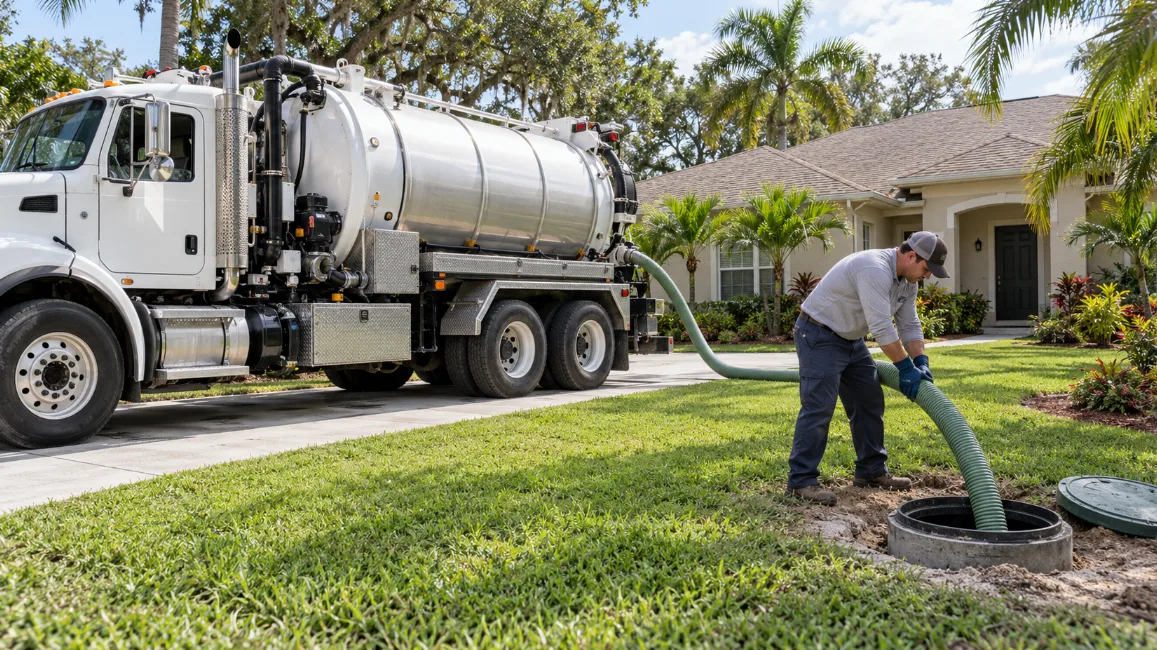
Routine care, a recurring backup or a new system: each starts with a clear scope and the property’s actual needs.
Remove accumulated solids and check accessible tank parts. Confirm capacity, access and the reason for service.
Explore Septic ServiceAddress stubborn deposits and accessible filters after defining the cleaning scope and tank condition.
Explore Septic ServiceReview tank condition and accessible equipment for maintenance or a real estate purchase. Define field assessment separately.
Explore Septic ServiceFind the failed filter, fitting, seal, cover or pump. Compare targeted repair with structural replacement.
Explore Septic ServicePlan capacity, treatment and the field together. Check sewer availability, usable soil and county approval first.
Explore Septic ServiceRequest help for backups or high tank levels. Report affected fixtures, alarms and wet-ground conditions.
Explore Septic Service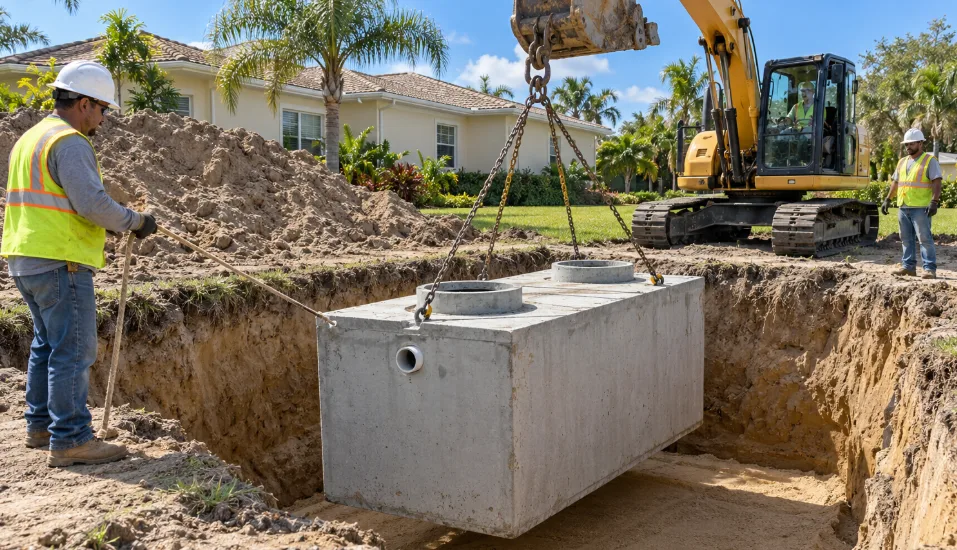
A tank can be sound while the field struggles. Review distribution, soil and groundwater before deciding on repair or replacement.
Separate broken lines and dosing faults from soil that cannot absorb flow. Repair the confirmed cause.
Explore Drain Field ServiceInvestigate recurring wet spots, odors and backups. Review the layout, distribution and changes to the site.
Explore Drain Field ServiceProtect usable soil and plan an approved replacement when repairs cannot restore reliable treatment.
Explore Drain Field ServiceStart with the floor plan, system record, sewer availability and site conditions before choosing a tank or replacement field.
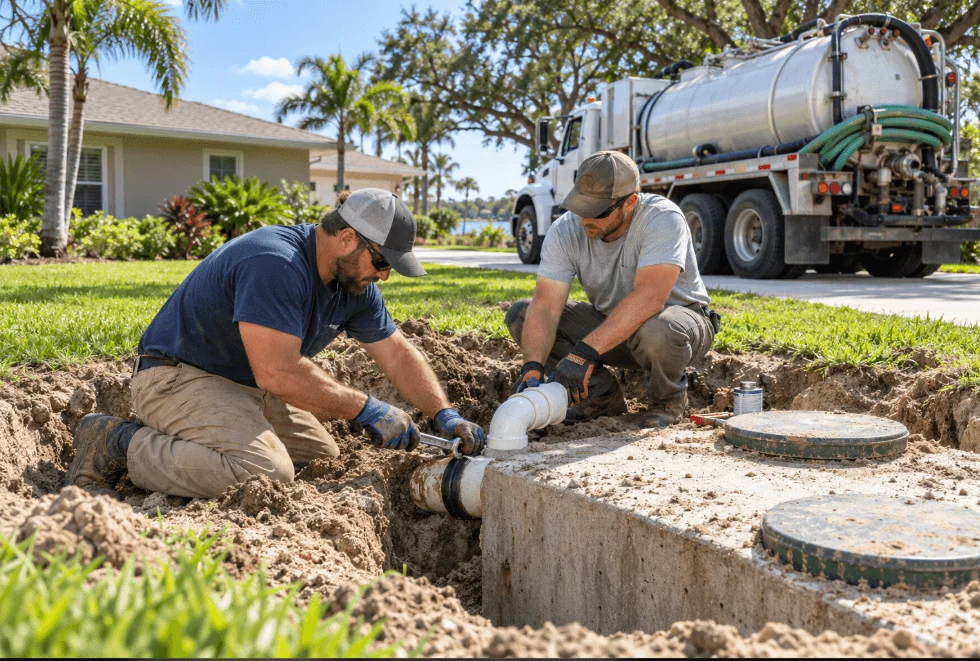
The housing figure describes metro listings, not every Savannah home. Bedrooms set residential tank minimums. Your permit and tank record confirm the installed capacity.
Start with Chatham County Environmental Health. Submit the site plan, soil information and proposed use. Obtain the construction or repair approval, then inspection before the system is covered or used.
What looks like a tank failure can start in the drain field, the plumbing or the way the property uses water.
Missed pumping or a failed filter can clog the field.
Leaks and heavy use can exceed the approved design.
These block pipes and interfere with treatment.
Saturated soil can reduce the field’s capacity.
Roots damage pipes; heavy loads compact soil or crush parts.
Neglected pumps and added bedrooms can change performance.
A septic system is more than a tank. Its storage capacity, treatment process and drain field each do a different job. Use this guide to understand home size, tank materials, expected lifespan and Savannah conditions before choosing a service.
1,907 sq ft was the Savannah metro median listed-home size in September 2026. It is market context, not a citywide average or a septic-home survey.
A three-bedroom house around 1,900 sq ft is a useful example. Bedroom count and approved use drive tank sizing; bathroom count and floor area alone do not.
| Home / use | Minimum liquid capacity |
|---|---|
| 1–4 bedrooms; no grinder | 1,000 gallons |
| 5 bedrooms; no grinder | 1,250 gallons |
| 6 bedrooms; no grinder | 1,500 gallons |
| 1–4 bedrooms with garbage grinder | 1,500 gallons |
These are state minimums, not a measured Savannah tank average. Add 250 gallons per bedroom above four; a garbage grinder raises required capacity by 50%. Confirm existing size from records.
Georgia requires two compartments and an approved outlet filter. Commercial capacity needs a separate flow-based design.
Heavy and durable. Check seams, cracks, access and lifting needs.
Lighter to move. Correct support, backfill and groundwater protection matter.
Lightweight and corrosion-resistant. Use an approved model with the specified installation.
The tank shell, drain field and mechanical parts age differently. Installation, groundwater and maintenance affect service life; no material guarantees a replacement age.
Conventional gravel trenches and chamber fields can work on suitable soil. Approved alternatives may use dosing pumps, aerobic treatment, drip distribution or a mound. Availability does not mean every option fits your lot.
Georgia generally requires 2 feet between a conventional or chamber field bottom and seasonal high groundwater. Class I aerobic pretreatment has different criteria. A soil evaluation determines the design.
Savannah averages about 48 inches of rain yearly under 1991–2020 normals. Wet ground, storm flooding and shallow seasonal groundwater can limit soil treatment.
Evaluate the actual parcel. Keep runoff, paving and traffic away from the field and its replacement area. After flooding, have pumping safety assessed before emptying the tank.
For permitting questions, contact Chatham County Environmental Health at 912-356-2160 or chatham.eh@dph.ga.gov. This is the government office, not our service line.
Georgia Rule 511-3-1-.03 calls for approval or denial within 20 days after a completed application. Soil work, design preparation, corrections, installation and inspection add separate time. Ask Chatham County for its current queue.
Our 4–6-business-day initial planning allowance starts after a complete application; it is not an agency deadline or a promise of permit approval.
Engineered designs have a separate 20-day evaluation provision, with written findings mailed within three business days. Deficient soil evaluations also have a three-business-day written-notice provision. Neither is an overall construction schedule.
The state rule addresses sewer available within 200 feet of the property line or in an abutting public right-of-way, with a limited county-determined exemption for eligible failing residential systems. Confirm how it applies to your address.
Government permit fees are separate from contractor prices. Chatham accepts online payment after an invoice is issued. Ask the office for current fees and required documents.
Reviewed October 28, 2026. Approved designs and current agency requirements control.
Practical answers for Savannah homes and businesses.
The metro listing median was 1,907 sq ft in September 2026. It is not an average of all city homes or septic properties.
Georgia minimum examples are 1,000 gallons for one to four bedrooms, 1,250 for five and 1,500 for six without a grinder. A measured local tank average was not established.
Yes. Georgia requires 50% more tank capacity when a garbage grinder is used.
Chatham County Environmental Health, part of Georgia’s Coastal Health District.
The state rule gives 20 days to approve or deny a completed application. Soil work, design, corrections and inspections add separate time; confirm the county queue.
No. Soil, groundwater, drainage, setbacks and available area determine suitability.
Ask Environmental Health before changing the site. The current form includes existing-system review, repair and additions.
Many conventional households need pumping every three to five years. Use measured solids, tank size, occupancy and system requirements.
No. Scope, availability and scheduling are confirmed separately.
Tell us where you are, what is happening and the service you need.